
 English
 Español
 Pусский
 Français
 العربية
 ไทย
ไทย Türk dili
 Indonesia
 Tiếng Việt


Aluminum Alloy Conductor
Encontre {palavra -chave} por atacado - citações da China. Somos fabricantes profissionais de {Keyword} Company, Factory & Exporters especializados em {Keyword} com alta qualidade.
Produto
Categoria:
-
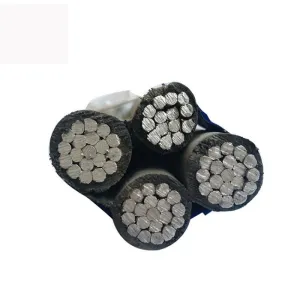
0.6/1kV ABC Aerial Bundle Cable, Aluminum Alloy Conductor, for Service Drop (Triplex: 2 Insulated + 1 Bare Messenger), XLPE Insulated
Sua classificação: Fios de linha isolados aéreosVistas: 289Número:Tempo de liberação: 2025-08-29 06:29:51This 0.6/1kV ABC aerial bundled cable is a high-efficiency power transmission product specifically designed for low-voltage power distribution service drop scenarios. It adopts a special triplex structure—2 insulated aluminum alloy conductors + 1 bare aluminum alloy messenger—paired with an XLPE (Cross-Linked Polyethylene) insulation layer, and has a rated voltage of 0.6/1kV (0.6kV phase voltage, 1kV line voltage). It accurately adapts to the terminal connection needs of low-voltage overhead power distribution networks and is widely used in scenarios such as service drop for urban and rural residential communities, branch power supply for commercial buildings (e.g., supermarkets, office buildings), terminal power distribution for industrial park workshops, and power access for users in remote areas. Its triplex structure of "2 insulated + 1 bare messenger" combines power transmission and mechanical load-bearing functions. The lightweight and corrosion-resistant advantages of aluminum alloy conductors, combined with the weather resistance of XLPE insulation, not only simplify the service drop construction process but also reduce long-term operation and maintenance costs. It has become a core choice with both practicality and economy in the low-voltage service drop field, especially suitable for terminal power distribution scenarios with high requirements for line stability, installation efficiency, and environmental adaptability. In terms of core specifications and structural design, the cable’s rated voltage of 0.6/1kV strictly complies with low-voltage power distribution standards, enabling it to stably carry the regular electricity load of terminal users (such as the clustered operation of household appliances and intermittent startup of commercial equipment). It can cope with voltage fluctuations during peak electricity consumption and avoid insulation breakdown or conductor overheating caused by overload. The unique triplex structure is its core competitiveness: 2 insulated aluminum alloy conductors serve as phase conductors, responsible for transmitting two phases (or single-phase two-wire) of three-phase current to meet the power needs of terminal users; 1 bare aluminum alloy messenger has dual functions—on the one hand, it acts as a neutral wire to balance current and avoid terminal voltage instability, and on the other hand, with its thickened design (the cross-section is usually 1-2 sizes larger than that of phase conductors), it bears the cable’s own weight, outdoor wind load, and ice load. There is no need to install additional load-bearing poles or stay wires, which greatly simplifies the connection structure from the overhead main line to the user terminal. The maximum connection span can reach more than 60 meters, reducing the occupation of surrounding space (compared with the traditional method of separately setting phase conductors and messengers, the line space occupation is reduced by more than 70%). The selection of aluminum alloy conductors brings outstanding advantages to the cable. Different from traditional pure aluminum conductors, by adding alloy elements such as magnesium and silicon (magnesium content 0.5%-0.8%, silicon content 0.2%-0.5%), it maintains high conductivity (≥58% IACS) while significantly improving mechanical strength and corrosion resistance: the tensile strength can reach more than 100MPa, which is 30% higher than that of pure aluminum conductors, and can better adapt to stretching and bending during service drop construction; the corrosion resistance is enhanced, especially in coastal humid areas and industrial dust areas, which can effectively resist oxidation and chemical erosion, extending the service life of the conductor to more than 25 years. At the same time, the density of aluminum alloy is only 2.7g/cm³, which is equivalent to pure aluminum (much lower than copper’s 8.9g/cm³), significantly reducing the cable’s self-weight (the weight per unit length is more than 60% lighter than that of copper conductor cables of the same specification). This reduces the support burden during connection, and installation can be completed without heavy lifting equipment, improving construction efficiency. The XLPE insulation layer is a key guarantee for the cable to adapt to the outdoor service drop environment. Compared with traditional PE or PVC insulation, it has multiple performance advantages: in terms of electrical performance, XLPE has extremely low dielectric loss (usually <0.002) and high insulation resistance (>1000MΩ·km), which can effectively isolate 0.6/1kV voltage, reduce energy loss during current transmission, and lower the electricity cost of terminal users; in terms of temperature resistance, XLPE can operate at a long-term temperature of up to 90℃ and a short-term overload temperature of up to 130℃, which can withstand high-temperature exposure in summer (still operating stably when the outdoor surface temperature exceeds 60℃) and severe cold in winter (no embrittlement at -40℃), adapting to temperature changes in different climate regions; in terms of weather resistance, XLPE forms a three-dimensional network molecular structure after cross-linking treatment, with significantly enhanced UV resistance and ozone aging resistance. It is not prone to insulation embrittlement and cracking even after long-term outdoor use (more than 20 years), reducing power outage faults caused by insulation failure. In addition, XLPE insulation also has good water resistance, which can prevent rainwater from seeping into the conductor gap and causing short circuits even in heavy rain, further improving the operation stability of the service drop. From the perspective of scenario adaptability and practical advantages, the characteristics of this cable make it widely applicable in low-voltage service drop scenarios. In urban and rural residential communities, its lightweight design facilitates connection from the community’s overhead main line to the outer wall of residential buildings, and the load-bearing function of the bare messenger eliminates the need to install additional brackets on the building’s outer wall, reducing the impact on the building’s appearance; in commercial buildings, the temperature resistance of XLPE insulation can adapt to the intermittent high-load operation of equipment such as shopping mall air conditioners and elevators, avoiding insulation overheating and aging; in the terminal power distribution of industrial park workshops, the corrosion resistance of aluminum alloy conductors can resist dust and chemical volatiles in the workshop, ensuring the continuity of power supply for the production line; when accessing users in remote areas, the weather resistance and long-span capability of the cable can reduce the number of poles set up in mountainous and hilly areas, lower construction difficulty, and accelerate the speed of power coverage (compared with traditional service drop methods, the construction period is shortened by more than 40%). In terms of quality assurance, this cable strictly complies with international and domestic low-voltage cable standards (such as IEC 60502-2 and GB/T 14049), with full-process quality control: in the conductor link, the aluminum alloy material must pass conductivity, tensile strength, and corrosion resistance tests (no obvious corrosion after 500 hours of salt spray test) to ensure it meets the mechanical and electrical requirements of service drop; the XLPE insulation material must pass 1000-hour thermal aging, UV resistance, dielectric loss, and voltage breakdown resistance tests (no breakdown for 1 minute under 1.5 times the rated voltage); the triplex integration process uses automated equipment to accurately control the spacing between insulated cores and bare messenger (2-3mm) and the thickness of the insulation layer (1.2mm-1.8mm, error ±0.1mm), avoiding insulation weak points caused by defects such as bubbles and impurities. The finished product testing includes voltage withstand test (no breakdown for 1 minute under 0.6/1kV rated voltage), insulation resistance test, tensile strength test of the bare messenger, and weather resistance test (simulating 5000 hours of outdoor aging). Only after all tests are qualified can the product leave the factory. In addition, the cable also passes service drop special tests, such as bending fatigue test (no damage after 50 repeated bends during simulation construction) and terminal connection reliability test (no overheating after 1 hour of current flow after connection), ensuring safety and stability in terminal use. Generally speaking, the 0.6/1kV ABC aerial bundled cable (aluminum alloy conductor, triplex service drop structure, XLPE insulation) perfectly solves the problems of complex lines, cumbersome construction, and high operation and maintenance costs of traditional low-voltage service drops by virtue of its unique "2 insulated + 1 bare messenger" design, the performance advantages of aluminum alloy conductors, and the weather resistance of XLPE insulation. It can not only meet the power supply needs of different terminal scenarios but also adapt to connection challenges in various environments. It provides an efficient, safe, and economical solution for the low-voltage power distribution terminal link, promoting the upgrading of low-voltage service drop technology towards a more integrated, reliable, and environmentally friendly direction. -
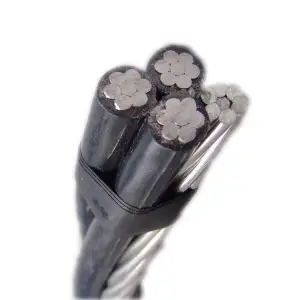
ABC Aerial Bundled Cable 0.6/1kv - 4X10/16/25/35mm² , Aluminum Alloy Conductor, XLPE Insulate
Sua classificação: Fios de linha isolados aéreosVistas: 302Número:Tempo de liberação: 2025-09-02 07:01:05The ABC Aerial Bundled Cable 0.6/1kV - 4×10/16/25/35mm² with aluminum alloy conductor and XLPE insulation is a flexibly adaptable transmission equipment developed for multi-load scenarios in the medium and low-voltage power distribution field. Relying on the core advantages of "multiple cross-section options, strong material support, and full insulation protection", it is widely used in urban and rural distribution network branch lines, small and medium-sized industrial park power distribution, large residential community zoned power supply, and rural electrification transformation. It has become a key solution to solve the problems of "single cross-section, high loss, and many safety hazards" of traditional power distribution lines. Its design focuses on the needs of medium and low-voltage systems for "on-demand adaptation, efficient transmission, and safety and durability", and achieves multi-dimensional optimization in conductor material, insulation performance, and cross-section configuration. It can not only meet the current-carrying requirements of different load scenarios but also resist interference from complex outdoor environments, providing strong support for the flexible construction and stable operation of power distribution networks. In terms of conductor and cross-section configuration, the core competitiveness of this cable lies in the aluminum alloy conductor and the design of "unified 4-core + multi-cross-section coverage". The conductor is made of high-purity aluminum alloy material (aluminum content ≥99.6%, with magnesium and silicon alloy elements added), processed by a special forming process. Compared with traditional pure aluminum conductors, the tensile strength of aluminum alloy conductors is increased to 220-260MPa (pure aluminum conductors are about 110MPa), which can withstand greater aerial tension. The pole spacing can be extended to 100-140 meters, reducing the number of poles by 25% compared with traditional lines. At the same time, its conductivity is maintained above 61% IACS, and the 20℃ DC resistance of conductors with different cross-sections is strictly controlled within the standard range: 10mm² cross-section ≤1.83Ω/km, 16mm² ≤1.15Ω/km, 25mm² ≤0.74Ω/km, 35mm² ≤0.53Ω/km, meeting the low-loss transmission requirements of the 0.6/1kV voltage level. The unified 4-core configuration (3 phase lines + 1 neutral line) is suitable for the three-phase four-wire power distribution system, eliminating the need to lay a separate neutral line, reducing line space occupation and laying costs; the multi-cross-section coverage of 10-35mm² can accurately match different load scenarios: 10mm² is suitable for small-load scenarios such as rural household distributed power supply and street lamp lighting; 16-25mm² meets the medium-load needs of small and medium-sized enterprise production power consumption and residential building power supply; 35mm² is applicable to larger load scenarios such as small and medium-sized production lines in industrial parks and centralized power supply for public facilities in large communities, realizing "selecting cross-sections on demand and accurately reducing costs". The XLPE insulation layer is a key barrier to ensure the safe operation of the cable. Each conductor is covered with cross-linked polyethylene (XLPE) as the insulation material, and the insulation thickness is precisely controlled according to the cross-section difference: 1.2-1.5mm for 10-16mm² cross-sections and 1.5-1.8mm for 25-35mm² cross-sections, which not only meets the insulation strength requirements of the 0.6/1kV voltage level (power frequency withstand voltage ≥10kV/1min without breakdown) but also has excellent comprehensive performance. After cross-linking treatment, the molecular structure of XLPE is three-dimensional network-like, with a long-term allowable operating temperature of 90℃ and a maximum short-circuit withstand temperature of 250℃ (1 second for a short time), which can adapt to the temperature changes caused by load fluctuations in the power distribution system and avoid thermal aging and cracking of the insulation. Its dielectric loss tangent value is ≤0.0005 (20℃, 50Hz), and the volume resistivity is ≥1×10¹⁴Ω·cm, with stable insulation performance. It can effectively suppress partial discharge and reduce the risk of leakage and short-circuit caused by insulation breakdown. In addition, XLPE insulation also has excellent weather resistance. After 1200 hours of UV irradiation test, the tensile strength retention rate is ≥85% without discoloration or cracking, which can resist harsh climates such as outdoor exposure, rain, snow, freezing, and acid-base haze for a long time, significantly extending the service life of the cable to more than 30 years. In terms of structure and performance adaptability, the bundled design and mechanical performance advantages of this cable are remarkable. The 4 conductors are integrated into one by parallel bundling, and no additional outer sheath is needed for the outer layer (some models can add HDPE sheaths on demand), which not only maintains a compact structure (overall outer diameter of 22-32mm for different cross-sections) but also reduces the weight per unit length (about 1.2kg/m for 10mm² and 2.8kg/m for 35mm²), which is more than 60% lighter than copper-core cables with the same cross-section. It greatly reduces the load on the poles and simplifies the laying process - erection can be completed with small wire-releasing machinery, and the installation efficiency is 40% higher than that of traditional multiple cables. It is especially suitable for complex laying environments such as narrow urban and rural lanes and dense factories in industrial parks. In terms of mechanical performance, the aluminum alloy conductor has excellent fatigue resistance. After 8000 bending cycle tests, the conductor breaking strength retention rate is ≥90%, which can resist dynamic tension caused by wind load and temperature changes. At the same time, the minimum bending radius of the cable is 12 times the outer diameter, and no excessive stretching is required during laying, avoiding damage to the insulation and conductor, and further ensuring construction safety and operation stability. In practical application scenarios, the value of this cable is fully reflected. In the transformation of urban and rural distribution network branch lines, the multi-cross-section feature can realize the flexible configuration of "large cross-section for main branches and small cross-section for sub-branches". For example, 35mm² is used for regional main branches, and 10-16mm² extends to residential buildings, reducing line loss while lowering the overall procurement cost. In the power distribution of small and medium-sized industrial parks, the 16-25mm² cross-section can meet the three-phase power needs of enterprises such as mechanical processing and light industry manufacturing, and the 1kV voltage level is suitable for the internal power distribution network of the park, avoiding abnormal equipment operation caused by voltage loss. In the zoned power supply of large residential communities, the 25-35mm² cross-section can carry the electricity consumption of residents and community public facilities in a single zone (300-500 households), and the 4-core configuration balances the three-phase load, avoiding voltage deviation caused by neutral line overload. In the rural electrification transformation, the 10-16mm² cross-section is suitable for rural household distributed power supply and agricultural irrigation equipment power supply. The weather resistance of the aluminum alloy conductor and the corrosion resistance of the XLPE insulation can adapt to the rural outdoor environment and the impact of pesticide residues, ensuring stable power supply for agricultural production. In terms of economic and environmental value, this cable also has significant advantages. In terms of material cost, aluminum alloy conductors are more than 50% cheaper than copper conductors, XLPE insulation materials have high cost performance, and the multi-cross-section design avoids waste of "using large materials for small purposes". The overall procurement cost is 45% lower than that of copper-core cables with the same current-carrying capacity. In terms of operation and maintenance cost, its designed service life of 30 years and excellent anti-fault ability reduce the frequency of line replacement and maintenance. The full-life cycle operation and maintenance cost is only 1/2 of that of traditional cables. In terms of environmental protection, aluminum alloy conductors can be 100% recycled, and XLPE insulation materials can achieve resource recycling after harmless treatment, which conforms to the concept of "green power distribution". In addition, the bundled structure reduces the space occupied by lines and reduces damage to the ecological environment along the line, which is especially suitable for power grid construction around ecological protection areas. In conclusion, through conductor material upgrading, multi-cross-section configuration innovation and insulation performance optimization, the ABC Aerial Bundled Cable 0.6/1kV - 4×10/16/25/35mm² with aluminum alloy conductor and XLPE insulation has achieved multiple values of "on-demand adaptation, high efficiency and low consumption, safety and environmental protection". It not only solves the pain points of traditional medium and low-voltage power distribution lines such as "poor adaptability, high cost and difficult operation and maintenance" but also can cover the power supply needs of diverse distribution scenarios such as urban and rural areas, industry, residences and rural areas. It provides key equipment support for the flexible construction and high-quality development of medium and low-voltage power distribution networks and is one of the important products promoting technological progress in the power distribution field. -
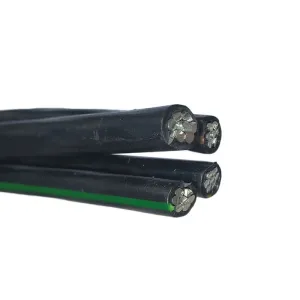
ABC Cable 0.6/1kv 4X16mm² Aerial Bundled Cable, Aluminum Alloy Conductor, XLPE Insulated, Corrosion Resistance for Coastal Industrial Areas
Sua classificação: Fios de linha isolados aéreosVistas: 321Número:Tempo de liberação: 2025-09-03 06:33:09The ABC Cable 0.6/1kV 4×16mm² Aerial Bundled Cable—featuring aluminum alloy conductors, XLPE insulation, and enhanced corrosion resistance—is a purpose-engineered solution for power distribution in coastal industrial areas, where harsh environmental conditions (saltwater spray, industrial pollutants, high humidity) pose unique challenges to electrical infrastructure. Unlike generic aerial bundled cables (ABCs), this product is optimized to withstand the corrosive forces of coastal environments while delivering stable, low-voltage power to industrial facilities, port operations, and coastal manufacturing zones. By examining its specialized conductor material, robust insulation, anti-corrosion design, and industrial-grade performance, this summary highlights why it has become a critical component for ensuring uninterrupted power in coastal industrial settings. At the core of the cable’s resilience is its aluminum alloy conductor, a significant upgrade from standard aluminum conductors used in non-coastal applications. The alloy—typically composed of aluminum with small additions of magnesium (1–2%), silicon (0.5–1%), and copper (0.1–0.3%)—offers two key advantages for coastal industrial use: enhanced corrosion resistance and superior mechanical strength. Unlike pure aluminum, which is susceptible to pitting corrosion from saltwater, the alloy forms a dense, stable oxide layer on its surface when exposed to air or moisture. This layer acts as a barrier against salt ions and industrial chemicals (e.g., chlorine from water treatment plants, sulfur dioxide from manufacturing), preventing the conductor from deteriorating over time. In accelerated corrosion tests (exposure to salt spray per ASTM B117), the aluminum alloy conductor maintains 90% of its original electrical conductivity after 1,000 hours—compared to 65% for pure aluminum. The alloy also boasts a tensile strength of 180–220 MPa, 30–40% higher than pure aluminum, making it more resistant to mechanical stress from strong coastal winds or vibration from industrial machinery. Each of the 4×16mm² conductors (three phase + one neutral) has an ampacity of 70–80 amps at 30°C, sufficient to power medium-sized coastal industrial equipment such as conveyor belts, pumps, and lighting systems in port warehouses or manufacturing facilities. Complementing the aluminum alloy conductor is the XLPE (cross-linked polyethylene) insulation, engineered to withstand both coastal humidity and industrial contaminants. XLPE undergoes a cross-linking process that transforms its molecular structure into a three-dimensional network, delivering exceptional resistance to water absorption, UV radiation, and chemical exposure. Its water absorption rate is ≤0.1% after 24 hours of immersion—critical for coastal areas where high humidity and occasional rain can penetrate lesser insulations. Unlike PVC insulation, which softens at 70°C and becomes brittle at low temperatures, XLPE maintains its flexibility and structural integrity across a temperature range of -40°C to 90°C, adapting to the temperature fluctuations common in coastal regions (e.g., cool morning fog to hot afternoon sun). The insulation also resists degradation from industrial chemicals: in tests, it shows no signs of swelling or cracking after exposure to chlorine (50 ppm) or sulfur dioxide (100 ppm) for 500 hours—essential for facilities like coastal desalination plants or chemical manufacturing sites. With a thickness of 1.2mm per core, the XLPE insulation meets the 0.6/1kV voltage rating while providing a physical barrier against salt spray and dust, ensuring long-term electrical safety. The cable’s aerial bundled (ABC) design is tailored to the logistical and environmental demands of coastal industrial areas. By integrating four insulated conductors into a single bundled unit, the design reduces clutter on utility poles and minimizes the risk of damage from salt-laden winds or falling debris from industrial operations. The conductors are twisted in a helical pattern with a pitch of 20–25 times the cable’s outer diameter (≈300–350mm), enhancing flexibility for navigating around industrial infrastructure (e.g., cranes, storage tanks) while maintaining structural stability. Many variants include a galvanized steel messenger wire (12mm²) integrated into the bundle, providing additional mechanical support for spans of up to 50 meters between poles. The messenger—coated with a zinc-aluminum alloy (55% aluminum, 43.5% zinc, 1.5% silicon)—offers exceptional corrosion resistance, matching the aluminum alloy conductors’ durability in saltwater environments. This integrated design eliminates the need for separate support wires, which are often the first components to corrode in coastal areas, reducing maintenance costs and downtime. A defining feature of this cable is its system-level corrosion protection, which extends beyond individual components to the entire assembly. All metal parts—including conductor strands, messenger wire, and any hardware (e.g., connectors, clamps)—are treated with a multi-layer anti-corrosion coating. The aluminum alloy conductors receive a thin layer of cerium conversion coating before insulation, which enhances the adhesion of the XLPE and provides an extra barrier against salt ions. The messenger wire’s zinc-aluminum coating is applied via hot-dip galvanizing, ensuring uniform coverage even in hard-to-reach areas. For critical connections (e.g., to industrial switchgear), the cable uses compression connectors made of the same aluminum alloy, with a conductive grease that repels moisture and prevents galvanic corrosion between dissimilar metals. These measures collectively extend the cable’s service life to 25–30 years in coastal industrial environments—double the lifespan of standard ABC cables used in inland areas. In terms of applications, this cable excels in diverse coastal industrial scenarios. In port facilities, it powers container handling equipment, warehouse lighting, and security systems, withstanding salt spray from nearby shipping lanes and vibration from heavy machinery. In coastal manufacturing plants (e.g., seafood processing, plastic production), its chemical resistance protects against exposure to cleaning agents or industrial byproducts, ensuring reliable power for production lines. In desalination facilities, where saltwater and chlorine are omnipresent, the cable’s corrosion-resistant design prevents downtime that could disrupt water supply. It is also used in offshore support structures (e.g., oil rig supply depots or wind farm maintenance facilities), where it must endure constant exposure to salt air and harsh weather. Installation and maintenance benefits further enhance its value for coastal industrial projects. The cable’s lightweight design (a 100-meter length weighs ≈35 kg) simplifies installation in hard-to-reach industrial areas, reducing the need for heavy lifting equipment. Its flexibility allows it to be routed around existing infrastructure without compromising insulation integrity. Maintenance requirements are minimal: the XLPE insulation and corrosion-resistant conductors require only annual visual inspections (checking for insulation cracks or conductor discoloration) and occasional cleaning to remove salt deposits. Unlike pure aluminum conductors, which may require periodic replacement due to corrosion, the aluminum alloy conductors can operate for decades without degradation, lowering lifecycle costs for industrial operators. Compliance with international standards ensures the cable’s compatibility with global coastal industrial networks. It meets IEC 60502-1 (for low-voltage power cables) and ASTM B233 (for aluminum alloy conductors), undergoing rigorous testing for corrosion resistance, electrical performance, and mechanical strength. For example, it passes a 5-minute voltage withstand test at 3.0kV (phase-to-phase) and a 1,000-hour salt spray test per ASTM B117, confirming its ability to perform in the harshest coastal industrial conditions. This compliance gives industrial operators confidence in the cable’s reliability, whether deploying it in a European port, an Asian manufacturing hub, or a North American desalination plant. In summary, the ABC Cable 0.6/1kV 4×16mm² with aluminum alloy conductors, XLPE insulation, and enhanced corrosion resistance addresses the unique challenges of coastal industrial power distribution. Its specialized materials, robust design, and system-level anti-corrosion measures deliver durability, reliability, and long-term performance—critical for industrial operations where power outages can result in significant financial losses or safety risks. By combining technical innovation with practical functionality, it has established itself as a trusted solution for powering coastal industrial infrastructure worldwide.
Notícias
Categoria:
Nenhum resultado de pesquisa!
Caso
Categoria:
Nenhum resultado de pesquisa!
Vídeo
Categoria:
Nenhum resultado de pesquisa!
Download
Categoria:
Nenhum resultado de pesquisa!
Recrutamento
Categoria:
Nenhum resultado de pesquisa!
Produtos recomendados
Nenhum resultado de pesquisa!



 Telefone
 Correspondência