
 English
 Español
 Pусский
 Français
 العربية
 ไทย
ไทย Türk dili
 Indonesia
 Tiếng Việt


PVC Cable
PVC (polyvinyl chloride) cable is one of the most widely used types of electrical cable in modern installations. It is valued for its combination of good electrical performance, mechanical strength, and cost effectiveness. The cable typically consists of a copper or aluminum conductor, insulation made from PVC compound, and, when required, a PVC outer sheath that provides additional mechanical and environmental protection.The conductor is usually made from annealed copper due to its excellent electrical conductivity and flexibility. For certain applications, aluminum conductors may be used as a lighter and more economical alternative. Conductors can be solid or stranded. Solid conductors are common in smaller cross‑sections and fixed wiring, while stranded conductors are preferred where flexibility is needed, such as in connection leads or areas exposed to frequent movement and vibration.PVC serves both as an insulating and sheathing material. As insulation, PVC provides reliable dielectric properties, preventing current leakage and short circuits between conductors and to ground. It is suitable for low and medium voltage applications within its specified rating. As a sheath, PVC adds resistance to abrasion, moisture, and many chemicals, making the cable appropriate for indoor installations and certain outdoor or industrial environments when correctly selected.One of the key advantages of PVC cable is its ease of installation. PVC is relatively flexible, allowing cables to be pulled through conduits, trunking, or behind walls with less effort. It can be easily stripped for termination and connection to electrical devices and panels. PVC cables are commonly used in lighting circuits, power distribution, household wiring, control wiring in industrial systems, and connection of electrical equipment and appliances.PVC cable is manufactured in a wide range of constructions and sizes to match different requirements. Variants include single‑core and multi‑core designs, armored and unarmored types, and versions with additional shielding for protection against electromagnetic interference. Color‑coded insulation is used to identify conductors for phase, neutral, and protective earth, improving safety and simplifying installation and maintenance.Temperature and environmental performance are important considerations. Standard PVC cable typically operates within a temperature range from about –15 °C to +70 °C, depending on the specific compound and design. At elevated temperatures, current‑carrying capacity must be derated, and continuous exposure to high heat can reduce the service life of the cable. PVC offers good resistance to many oils, greases, and chemicals, but it is not suitable for all corrosive environments, and prolonged exposure to direct sunlight can cause aging unless UV‑resistant formulations are used.From a safety standpoint, PVC insulation provides good resistance to flame propagation, helping limit the spread of fire along cable routes. However, traditional PVC can release dense smoke and corrosive gases when burning, so in locations with strict fire safety requirements, low‑smoke, halogen‑free alternatives may be preferred. Nonetheless, for general residential, commercial, and many industrial applications, PVC cable remains a practical, economical, and dependable solution for the transmission and distribution of electrical power and signals.
Produto
Categoria:
-
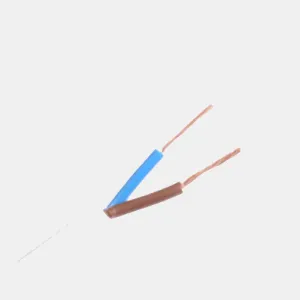
Cu/PVC/PVC H03VV-F H03VVH2-F Cabo de PVC flexível plano plano
Sua classificação: Fio de construçãoVistas: 279Número:Tempo de liberação: 2025-02-19 02:51:31318 Y Cu/PVC/PVC H03VV-F H03VVH2-F Refere-se ao cabo PVC flexível circular com uma taxa de tensão de 300/300V. É chamado ou nomeado de acordo com o padrão harmonizado (geralmente é incorreto como incorreto como HO3VVF). O fio flexível de PVC é fabricado de acordo com o BS 50525-2-11. O cabo H03VVH2F/H03VV-F é amplamente utilizado em edifícios domésticos e públicos com aparelhos portáteis de serviço comum, como rádios, lâmpadas de mesa.Cu/PVC/PVC H03VVH2F refere-se aos cabos planos de H03VV-F. Possui a mesma tensão, padrão e uso que o cabo H03VV -F 3182Y - cabo 3183Y - 3184Y cabo.Os britânicos... -
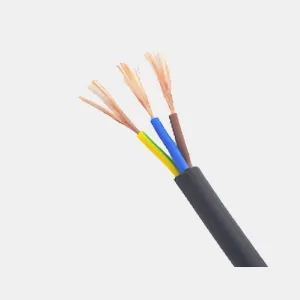
Cu/PVC/PVC H05VV-F H05VVH2-F Cabo de PVC flexível plana
Sua classificação: Fio de construçãoVistas: 293Número:Tempo de liberação: 2025-02-19 02:55:34O cabo 318 Y Cu/PVC/PVC H05VV-F refere o cabo flexível circular com a taxa de tensão de 300/500V. O tipo de cabo H05VV-F é chamado ou chamado de achoording para padrão harmonizado (geralmente é incorreto como incorreto como HO5VVF). O cabo H05VV-F é fabricado de acordo com o BS 50525-2-11. É amplo usado em edifícios nacionais e públicos com aparelhos portáteis de serviço comum, como rádios, lâmpadas de mesa.Cu/PVC/PVC H05VVH2-F refere-se os cabos planos de H05VV-F. Possui a mesma tensão, padrão e uso que o cabo H05VV -F 3182Y - cabo 3183Y - 3184Y cabo.Os britânicos geralmente referem esses cab... -
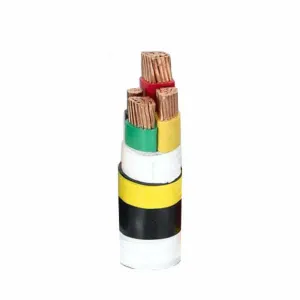
Al / XLPE / PVC 1kv Cable 1X630 1X500 1X400 1X300 1X240 1X185 1X150 1X120 1X95 1X70
Sua classificação: Cabo de baixa tensãoVistas: 327Número:Tempo de liberação: 2025-07-28 02:47:43This article introduces 1kV cables with an Al/XLPE/PVC structure, covering a variety of single - core cross - section specifications, including 1×630mm², 1×500mm², 1×400mm², 1×300mm², 1×240mm², 1×185mm², 1×150mm², 1×120mm², 1×95mm² and 1×70mm². The structural design of this series of cables has clear functionality: Aluminum (Al) is used as the conductor, which has good conductivity and economy, making it suitable for medium and low - voltage power transmission; Cross - linked polyethylene (XLPE) serves as the insulation layer, with excellent temperature resistance and insulation performance, which can adapt to the stable operation of the 1kV voltage level; Polyvinyl chloride (PVC) is used as the sheath, which has wear - resistant and anti - corrosion properties and can protect the cable from external environmental damage. In terms of application scenarios, small - section specifications (such as 1×70mm² and 1×95mm²) are suitable for small industrial equipment and building distribution branches; Medium - sized sections (such as 1×120mm² to 1×300mm²) can meet the needs of large - scale building total power distribution and small and medium - sized motor power supply; Large sections (such as 1×400mm² and above) are applicable to high - current transmission scenarios such as industrial park main lines and substation outgoing lines. Overall, relying on its structural rationality and specification diversity, this series of cables can adapt to various power transmission needs under the 1kV voltage level. -
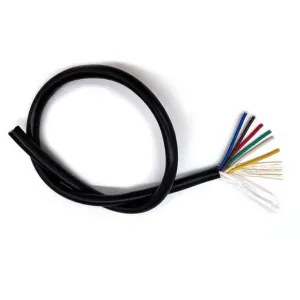
Copper Cable Cu/XLPE/PVC/Swa/PVC-Fr-UV-Black 90c Size 3cx16+16 Sqmm
Sua classificação: Cabo de baixa tensãoVistas: 496Número:Tempo de liberação: 2025-08-01 07:08:21This paper introduces a copper cable with the specification of 3cx16+16 Sqmm, which has a structure of Cu/XLPE/PVC/Swa/PVC-Fr-UV-Black and a temperature resistance grade of 90℃, suitable for power transmission in various complex environments. The conductor is made of high-purity copper (Cu), with excellent conductivity, ensuring efficient and stable power transmission and low energy loss. The insulation layer is cross-linked polyethylene (XLPE), which has strong temperature resistance and can maintain good insulation performance at 90℃. It has high insulation resistance, which can effectively block current and prevent electric leakage. The outer layer of XLPE is wrapped with a polyvinyl chloride (PVC) sheath, which plays a preliminary protective role. The intermediate steel wire armoring (Swa) significantly improves the mechanical strength and impact resistance of the cable, and can resist external damage during laying and use. The outermost layer is a black PVC sheath with flame retardant (Fr) and ultraviolet (UV) resistant properties, which can adapt to harsh environments such as outdoor exposure and humidity, delay aging and extend service life. The 3 main cores (16 Sqmm each) of the cable are suitable for three-phase circuits, plus 1 neutral core of 16 Sqmm, which is applicable to scenarios such as industrial equipment power distribution, commercial building branch lines, and outdoor lighting systems. Its overall structure is compact with good bending performance, supporting various laying methods such as direct burial, pipe threading and overhead, providing a safe and durable solution for medium and low voltage power distribution. -
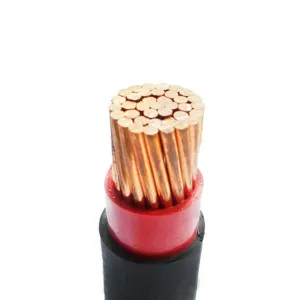
Cable Nyy Unipolar 0.6/1 Kv PVC PVC 120mm2 150mm2 185mm2 Cable
Sua classificação: Cabo de baixa tensãoVistas: 393Número:Tempo de liberação: 2025-08-07 03:18:20The NYY unipolar cable is a type of power cable suitable for low-voltage distribution systems, with a designed voltage level of 0.6/1 Kv. It is widely used in power transmission scenarios in industrial, commercial, and civil buildings. This cable adopts a unipolar structure, meaning each cable contains only one conductive core, with cross-sectional areas of 120mm², 150mm², and 185mm² respectively, allowing flexible selection based on different current-carrying capacity requirements. In terms of structure, the core of the NYY unipolar cable is a high-purity copper or aluminum conductor, which has excellent electrical conductivity and can effectively reduce energy loss during power transmission. The conductor is wrapped with a polyvinyl chloride (PVC) insulation layer. PVC material has good insulation, corrosion resistance, and mechanical strength, which can effectively protect the conductor from the external environment and ensure the safe operation of the cable. Outside the insulation layer, there is a PVC sheath, which further enhances the cable's protective capability, enabling it to adapt to various complex environments, such as humid and dusty places, and even withstand mechanical collisions and squeeze to a certain extent. In terms of performance, the voltage level of this cable is 0.6/1 Kv, which means its rated power frequency voltage is 0.6 Kv and the maximum working voltage is 1 Kv. It is suitable for power transmission in low-voltage distribution systems and can be used to connect electrical equipment such as transformers, distribution cabinets, and motors. Cables with different cross-sectional areas correspond to different current-carrying capacities. The 120mm², 150mm², and 185mm² cables can carry different magnitudes of current respectively. Users can select the appropriate specification according to the actual electrical load to ensure the safe and efficient operation of the cable. In addition, the cable also has good heat resistance and can work stably within a certain temperature range. Generally, its long-term allowable operating temperature does not exceed 70℃, and the maximum temperature during a short circuit does not exceed 160℃ (with a duration not exceeding 5 seconds). In terms of installation and use, the NYY unipolar cable can be installed in various ways such as open laying, concealed laying, and pipe threading. During installation, excessive bending and stretching should be avoided to prevent damage to the cable's insulation layer and sheath. At the same time, the cable laying environment should be away from dangerous factors such as high temperature, open flame, and chemical corrosion to extend the service life of the cable. When connecting, appropriate joints and terminals should be used to ensure firm connection and reliable insulation, avoiding faults such as leakage and short circuit. In general, the NYY unipolar cable (0.6/1 Kv, PVC insulation and sheath, 120mm², 150mm², 185mm²) has become an ideal power transmission cable in low-voltage distribution systems due to its excellent performance, reliable protection, and flexible application. It can meet the power demand in different scenarios and provide a strong guarantee for the safe and stable operation of the power system. -
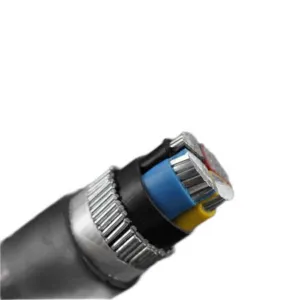
Cable Nayy 1X240 mm2 1X185 mm2 Aluminium Conductor PVC PVC Cable
Sua classificação: Cabo de baixa tensãoVistas: 434Número:Tempo de liberação: 2025-08-07 03:23:46The Nayy aluminium conductor PVC cable is a single-core cable designed for medium and high-voltage power transmission, featuring high-quality aluminium conductors and a double-layer PVC protective structure. It is suitable for power distribution scenarios in industrial, commercial, and large-scale infrastructure projects. This cable series offers two cross-sectional specifications: 1X185 mm² and 1X240 mm², catering to power transmission needs under different load intensities while balancing economy and reliability. In terms of structure, the core of the cable is a high-purity aluminium conductor, which undergoes annealing to achieve excellent electrical conductivity and flexibility. The choice of aluminium conductor not only reduces the overall weight of the cable, facilitating transportation and installation, but also provides a cost advantage over copper conductors, making it particularly suitable for large-scale engineering applications. The 185 mm² conductor is ideal for medium-power transmission, such as connecting medium-sized industrial equipment or regional distribution systems; the 240 mm² conductor, capable of carrying larger currents, is commonly used in main distribution lines of large factories, high-rise buildings, or grid-connection lines of new energy power stations. In terms of protection, the cable adopts a double-layer PVC (polyvinyl chloride) structure: the inner layer is insulating PVC, which has excellent dielectric properties to effectively insulate current and prevent leakage. Its insulation resistance and breakdown voltage meet the standards of the International Electrotechnical Commission (IEC), ensuring stable electrical performance during long-term use. The outer layer is a sheath PVC, modified with a special formula to resist ultraviolet rays, abrasion, and chemical corrosion. It can adapt to various complex environments such as outdoor laying, underground piping, and bridge installation, ensuring the service life of the cable even in humid, dusty, or temperature-varying conditions. In terms of performance, the cable is designed to meet strict requirements in practical applications. Its long-term allowable operating temperature does not exceed 70°C, and it can withstand high temperatures of 160°C during short circuits (lasting no more than 5 seconds), maintaining structural stability in case of sudden overloads. In terms of mechanical properties, the minimum bending radius of the cable is 6 times the outer diameter for fixed laying and 12 times the outer diameter for dynamic laying, allowing flexible installation in narrow spaces. It also has high tensile strength, reducing the risk of damage during handling and construction. In application scenarios, the 1X185 mm² specification is often used in distribution trunks of commercial parks, power supply for production lines in medium-sized manufacturing industries, and power transmission for public facilities such as urban street lights and transportation hubs. The 1X240 mm² specification is more suitable for high-voltage motor connections in large industrial plants, backup power lines in data centers, and collector lines in solar photovoltaic power stations and wind farms. Additionally, due to the lightweight nature of aluminium conductors, the cable performs excellently in scenarios requiring reduced structural load, such as bridges and high-rise buildings. In terms of installation and maintenance, the cable supports various methods such as open laying, concealed laying, and pipe threading. During laying, direct contact with sharp objects should be avoided to prevent sheath damage. Special aluminium conductor joints should be used for connection to ensure stable conductivity, and insulation testing and grounding treatment should be performed in accordance with local electrical regulations. Regular inspection of sheath integrity and insulation resistance can further extend the service life of the cable. In conclusion, the Nayy aluminium conductor PVC cable (1X185 mm², 1X240 mm²) stands out as an ideal solution in the medium and high-voltage power transmission field, thanks to the cost advantage of aluminium conductors, reliable protection of PVC materials, and flexible specification options. It not only meets power demands in different scenarios but also balances economy and safety, providing solid support for the stable operation of power systems. -
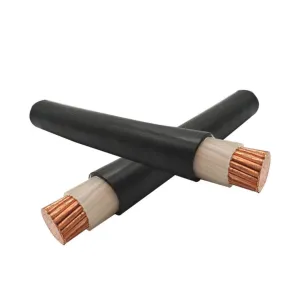
0.6/1kv 1c X 16mm2 Stranded Hard-Drawn Copper Aerial Cu PVC Cable
Sua classificação: Cabo de baixa tensãoVistas: 336Número:Tempo de liberação: 2025-08-11 08:44:14The cable involved in this abstract is a 0.6/1kV 1-core 16mm² stranded hard-drawn copper aerial polyvinyl chloride (PVC) cable, which is a widely used overhead cable product in low-voltage power transmission and distribution systems. Its core design and performance characteristics make it suitable for various outdoor overhead scenarios, with advantages of stability, durability, and cost-effectiveness. In terms of structure, the cable adopts a single-core design, and the conductor is a 16mm² stranded hard-drawn copper. The hard-drawn copper strand is composed of multiple high-strength copper wires twisted together, which not only retains the excellent electrical conductivity of copper but also enhances the mechanical strength of the conductor through the stranding process. This enables it to withstand external forces such as tension during overhead installation, wind force, vibration in the outdoor environment, etc., ensuring that the cable is not easily broken or damaged during long-term use. The rated voltage of the cable is 0.6/1kV, which indicates that it is suitable for low-voltage distribution systems and can be used to connect distribution transformers, distribution boxes, user terminals and other equipment to realize the transmission and distribution of electrical energy. 0.6kV refers to the rated working voltage between the cable conductor and the shielding layer, while 1kV is the rated working voltage between different conductors of the cable. This voltage level meets the needs of most industrial, agricultural and civil low-voltage distribution scenarios. In addition, the cable uses polyvinyl chloride (PVC) as the insulating layer material. PVC has good insulation performance, which can effectively prevent current leakage and ensure the safe operation of the cable. At the same time, PVC also has certain weather resistance, corrosion resistance and mechanical strength, which can resist the influence of factors such as sunlight, rain and snow erosion, temperature changes, and corrosive gases in the air in the outdoor environment, thus extending the service life of the cable. Overall, the 0.6/1kV 1-core 16mm² stranded hard-drawn copper aerial PVC cable, with its reasonable structural design, excellent conductivity, reliable insulation protection and strong environmental adaptability, plays an important role in low-voltage overhead distribution lines, providing stable and safe power supply for various users. -
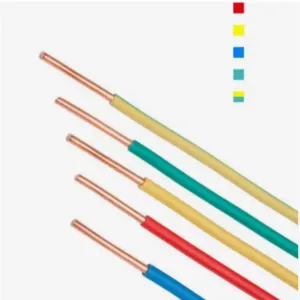
Single Conductor Thwn-2 LSZH 600V/1kv PVC Cable
Sua classificação: Fio de construçãoVistas: 326Número:Tempo de liberação: 2025-08-18 03:12:00The single conductor THWN - 2 LSZH 600V/1kV PVC cable is an excellent performance and widely used power transmission cable, which occupies an important position in the electrical system. In terms of structure, the cable adopts a single conductor design, which makes the cable have high flexibility in the installation and use process and can adapt to a variety of complex laying environments. The conductor is usually made of high - purity copper or aluminum. The high - purity metal material ensures good electrical conductivity, which can efficiently transmit electricity and reduce power loss. The insulation layer of the cable is made of polyvinyl chloride (PVC). PVC material has excellent insulation performance, which can effectively isolate the current, prevent electric leakage accidents, and ensure the safety of power transmission. At the same time, the cable meets the THWN - 2 standard, which means it has good temperature resistance and can work stably in a higher temperature environment. Generally, the allowable working temperature range is wide, which can adapt to the temperature changes in different scenarios. The low smoke zero halogen (LSZH) characteristic is a major highlight of this cable. When the cable burns, it produces little smoke and does not release toxic and harmful gases. In case of emergencies such as fire, it can buy valuable time for personnel evacuation and rescue work, reduce secondary injuries caused by smoke and toxic gases, and greatly improve the safety performance of the cable. In terms of voltage level, the cable is suitable for 600V/1kV circuit systems. This voltage range enables it to meet a variety of medium and low - voltage power transmission needs. It can be seen in the power supply of industrial equipment, the electrical wiring of commercial buildings, and the power distribution of civil residences. In industrial scenarios, it can be used to connect various production equipment, provide stable power supply for them, and ensure the smooth progress of production. In commercial buildings, it can meet the power needs of various electrical equipment such as lighting, air conditioning, and elevators. In civil residences, it can be used as a main line or branch line to transmit electricity to various rooms, ensuring the daily electricity use of residents. In addition, the cable also has certain corrosion resistance and mechanical strength, which can resist the erosion of the external environment and mechanical damage to a certain extent, and prolong its service life. Its installation methods are also diverse, including overhead laying, buried laying, pipe laying, etc., to adapt to different engineering requirements. To sum up, the single conductor THWN - 2 LSZH 600V/1kV PVC cable, with its excellent conductivity, reliable insulation effect, good temperature resistance, low smoke zero halogen safety characteristics and wide voltage application range, has become an indispensable important part of many electrical systems, providing stable and safe guarantee for various power transmission scenarios. -
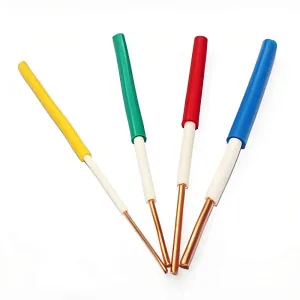
Fire-Resistant PVC Cable Nhbv 1.5-6mm² - 450/750V
Sua classificação: Fio de construçãoVistas: 383Número:Tempo de liberação: 2025-08-18 07:06:21Fire-resistant PVC cable NHBV 1.5-6mm² is a high-performance cable with a rated voltage of 450/750V, with cross-sectional sizes ranging from 1.5mm² to 6mm². Due to its excellent fire resistance and stable electrical performance, it is widely used in places with high requirements for fire safety. "NHBV" indicates that it has fire-resistant characteristics, suitable for key scenarios such as emergency power supply circuits and high-rise building distribution systems. It can maintain normal power supply for a certain period of time in case of fire, striving for valuable time for personnel evacuation and fire rescue. In terms of specification parameters, the current-carrying capacity of cables with different cross-sectional sizes varies significantly, which can meet diverse power demand. The 1.5mm² cable has a current-carrying capacity of about 14-20A, suitable for lighting circuits and small household appliances; the 2.5mm² cable has a current-carrying capacity of 20-25A, which can be used for ordinary socket circuits and small power equipment; the 4mm² cable has a current-carrying capacity of about 25-32A, applicable to high-power household appliances such as air conditioners and electric water heaters; the 6mm² cable has a current-carrying capacity of up to 32-40A, which can meet the power supply needs of medium-sized power equipment and main lines. The rated voltage of the cable is 450/750V, in line with the low-voltage distribution system standards. The insulation resistance is ≥100MΩ·km, and it passes the 3000V voltage withstand test (no breakdown for 1 minute), ensuring insulation stability under normal working conditions. Its fire resistance has passed the test of GB/T 19666 standard, and it can maintain circuit integrity within 3 hours of burning in 950-1000℃ flame without short circuit or open circuit. In terms of material and structure, the conductor is made of high-purity electrolytic copper (purity above 99.95%), and the single-strand or multi-strand stranded design takes both conductive efficiency and flexibility into account. The multi-strand stranded structure makes it easy to bend and lay, suitable for complex wiring environments. The insulation layer is made of flame-retardant PVC material with fire-resistant additives, with an operating temperature range of -15℃ to 70℃, having good moisture resistance and chemical corrosion resistance, and can work stably in humid and dusty environments. The outer sheath is made of red or black fire-resistant PVC, with clear model, specification, fire-resistant logo and other information printed on the surface, facilitating identification and traceability. Its characteristic uses are concentrated in key areas of fire safety. In high-rise buildings, it can be used as the power supply cable for emergency lighting, fire pumps, smoke exhaust fans and other equipment to ensure the normal operation of the emergency system in case of fire; in hospitals, shopping malls and other crowded places, it is used for main distribution lines and emergency circuits to ensure continuous power supply for important equipment; in industrial plants, it is suitable for control circuits and power lines in high-temperature environments to resist the impact of local high temperature on the cable. In addition, the cable can also be used in the distribution systems of closed spaces such as subways and tunnels to cope with possible fire risks. The production process strictly follows national standards, including copper purification, precision wire drawing, fire-resistant insulation layer extrusion, fire-resistant outer sheath wrapping, high-temperature curing and other processes. Each batch of products must pass multiple tests such as fire resistance, conductor resistance and insulation thickness to ensure reliable quality. During installation, it needs to be matched with fire-resistant terminals. Fixed laying can be done by cable tray, pipe threading or open laying. When open laying, it should be kept away from heat sources and sharp objects. With excellent fire resistance and wide applicability, NHBV cable provides a strong guarantee for fire safety in various places. -
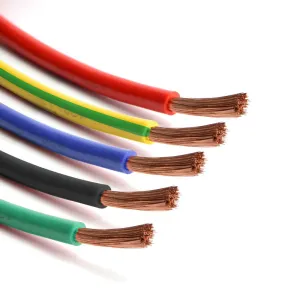
Stranded Copper PVC Cable, 600V, Available in 5.5mm² (~10 AWG) , 8.0mm² (~8 AWG) , 100mm² (~3/0 AWG) , 200mm² (~400 kcmil)
Sua classificação: Fio de construçãoVistas: 325Número:Tempo de liberação: 2025-08-25 06:55:29The stranded copper PVC cable (rated voltage 600V, available in four specifications: 5.5mm²/~10 AWG, 8.0mm²/~8 AWG, 100mm²/~3/0 AWG, 200mm²/~400 kcmil) is a widely used basic power transmission component in the low-voltage power distribution field. Relying on the excellent performance of the stranded copper conductor, the reliable protection of the PVC insulation layer, and flexible specification options, it adapts to the low-voltage power supply needs of industrial, commercial, civil, and municipal scenarios, and becomes a key product to ensure the stable operation of power distribution systems with 600V and below. In terms of core specifications and performance, the 600V rated voltage design of the cable accurately matches the common voltage level of low-voltage power distribution systems. It can be directly used for power transmission from the distribution box to the electrical terminal without additional voltage reduction equipment, greatly simplifying the power distribution link. The four specifications cover scenarios with different current-carrying requirements: the 5.5mm² (corresponding to 10 AWG, American Wire Gauge) specification has a current-carrying capacity of approximately 30-40A (when installed in air, ambient temperature 30℃), which is suitable for power supply of low-power electrical equipment, such as household lighting circuits, dedicated power supply for small household appliances (wall-mounted air conditioners, refrigerators), or socket branch circuits in commercial places; the 8.0mm² (corresponding to 8 AWG) specification has an increased current-carrying capacity of 45-55A, which can meet the needs of medium-sized electrical equipment, such as ovens in commercial kitchens, small motors in industrial workshops, and backup power circuits for elevators in office buildings; the 100mm² (corresponding to 3/0 AWG) specification has a current-carrying capacity of 200-230A, designed specifically for high-power equipment, such as heavy machine tools in industrial production lines, central air-conditioning hosts in commercial complexes, and main power supply circuits for server cabinets in data centers; the 200mm² (corresponding to 400 kcmil, thousand circular mils) specification has a current-carrying capacity of 320-350A, mainly used for low-voltage power distribution trunk lines, such as workshop main power distribution cables in industrial parks, floor main power distribution circuits in large shopping malls, and water pump cluster power supply trunks in municipal sewage treatment plants, undertaking the total power transmission task in the area. This multi-specification coverage allows users to select models accurately according to specific electrical loads, installation environments, and equipment power, avoiding cost waste caused by "over-specification" or safety hazards caused by "under-specification". In terms of material and structural advantages, the conductor is made of high-purity stranded copper with a purity of over 99.95%. Compared with solid copper conductors, the stranded structure is formed by spiral stranding of dozens of thin copper wires, with two core advantages: first, it has better flexibility and a smaller bending radius (the static bending radius is not less than 6 times the outer diameter of the cable, and the dynamic bending radius is not less than 10 times), which is convenient for installation in narrow spaces (such as wall conduits and internal wiring troughs of equipment) and adapts to complex wiring environments, such as wall-embedded pipes in home decoration and dense wiring inside industrial equipment; second, it has higher mechanical strength. The stranded structure can disperse external impact and reduce the risk of conductor breakage. During transportation and installation, even if it is slightly pulled or bent, conductor damage is not easy to occur, reducing construction losses. At the same time, the high-purity copper has extremely low resistivity (resistivity ≤0.0172Ω·mm²/m at 20℃), and the power loss during current transmission is much lower than that of aluminum conductors. Taking a 100m long 100mm² cable as an example, its DC resistance is only about 0.018Ω, and the line loss during operation can be controlled within 1%, which can significantly save electricity costs in long-term use. The insulation layer is made of polyvinyl chloride (PVC) material, with multiple protective properties: first, it has excellent insulation performance, with a volume resistivity ≥10¹⁴Ω·cm, which can effectively isolate the conductor from the outside world and prevent electric leakage accidents. Even in humid environments (relative humidity ≤85%), it can maintain stable insulation performance, adapting to humid scenarios such as bathrooms, basements, and underground garages; second, it has good temperature resistance, with a normal operating temperature range of -15℃ to 70℃, which can cope with environmental temperature changes in most areas. It is not easy to soften and deform at high temperatures in summer, and will not become brittle and crack at low temperatures in winter, making it suitable for use in different climate regions in northern and southern China; in addition, the PVC insulation layer is also added with flame retardants, meeting the flame retardant requirements in GB/T 19666 (usually Class B or Class C flame retardant). It can inhibit the spread of flames in case of fire, and release less toxic gas during combustion, improving electrical safety, especially suitable for crowded commercial places (such as shopping malls, schools) and confined spaces (such as underground machine rooms). From the perspective of practical application scenarios, the cable has strong versatility. In the civil field, the 5.5mm² and 8.0mm² specifications are the main cables for residential decoration. The 5.5mm² is used for lighting and ordinary sockets, and the 8.0mm² is used for dedicated power supply for high-power household appliances such as air conditioners and electric water heaters, ensuring household electrical safety; in the commercial field, specifications below 10.0mm² are used for branch power distribution in shops and office buildings, the 100mm² specification is used for main power supply of central air conditioners and large elevators, and the 200mm² specification is used as the floor main power distribution trunk line in shopping malls, connecting the substation and the floor distribution room; in the industrial field, specifications of 8.0mm² and above are widely used for power supply of workshop equipment, and the 100mm² and 200mm² specifications are adapted to heavy equipment and production line main circuits, withstanding the dusty and slightly oily environment in the workshop; in the municipal field, the cable can also be used for road lighting and power supply of small municipal facilities (such as bus stop charging piles). The weather resistance of the PVC insulation layer can cope with outdoor sun and rain, extending the service life. In addition, the cable also has significant advantages in installation and maintenance. The surface of its outer PVC insulation layer is smooth, with low friction resistance during installation, which can easily pass through pipes or cable trays, reducing construction difficulty; the stranded copper conductor has good ductility, which is convenient for crimping or welding with terminals during wiring, reducing the risk of poor contact. In the maintenance link, the PVC insulation layer has various colors (commonly black, red, blue, yellow), and the phase wire, neutral wire, and ground wire can be distinguished by color, facilitating later fault detection; at the same time, the PVC material has stable aging resistance, with a service life of 15-20 years in normal use environment, and no frequent replacement is required during the period, greatly reducing maintenance costs. Generally speaking, the stranded copper PVC cable (600V, multiple specifications) has become a "versatile" cable in the low-voltage power distribution field due to its reliable performance, flexible specifications, and moderate cost, providing an efficient and safe solution for low-voltage power transmission in various industries. -
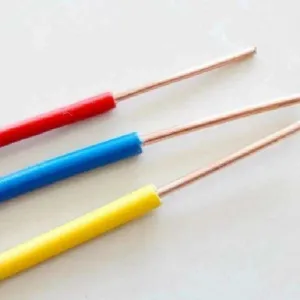
PVC Insulated Single Core Solid Copper BV Electrical Cable 12 AWG
Sua classificação: Fio de construçãoVistas: 293Número:Tempo de liberação: 2025-09-04 05:56:21The PVC insulated single core solid copper BV electrical cable in 12 AWG stands as a reliable and versatile solution for a wide range of electrical wiring applications, combining the excellent conductivity of solid copper with the protective properties of PVC insulation to deliver consistent performance in both residential and light commercial settings. 12 AWG, which corresponds to a cross-sectional area of approximately 3.31mm², positions this cable as a robust option capable of handling moderate to high electrical loads, making it a staple in electrical systems where durability and efficiency are paramount. At the heart of this cable is a solid copper conductor, a material celebrated for its exceptional electrical conductivity—approximately 580 S/m—which ensures minimal energy loss during power transmission. The solid core design, as opposed to stranded alternatives, provides superior structural rigidity, simplifying installation in various environments such as wall cavities, conduits, or behind baseboards. This rigidity allows for straightforward routing through tight spaces and around corners without the risk of kinking or damaging the conductor, a common concern with more flexible stranded wires. The copper used is 99.9% pure, minimizing impurities that could hinder conductivity, and its inherent resistance to corrosion, when protected by the PVC insulation, ensures long-term reliability even in humid conditions like bathrooms, kitchens, or basements. Encasing the solid copper core is a durable PVC (polyvinyl chloride) insulation layer, which serves as a critical barrier against electrical leakage, short circuits, and physical damage. The insulation is engineered to withstand a voltage rating typically up to 600V, making it suitable for standard household and light commercial electrical systems. It boasts a high dielectric strength of around 15 kV/mm, ensuring that electrical current remains contained within the conductor even when in contact with other materials or in proximity to other wires. The PVC insulation is also flame-retardant, adhering to international standards such as IEC 60332-1-2, which requires it to self-extinguish within 60 seconds of ignition—an essential safety feature that reduces the risk of fire propagation in the event of an electrical fault. The 12 AWG size of the cable gives it a current-carrying capacity of approximately 20-25A under normal operating conditions, depending on installation methods and environmental factors. This makes it well-suited for a variety of applications, including powering general-purpose outlets in living rooms, bedrooms, and home offices, where it can efficiently supply electricity to devices such as televisions, computers, small appliances, and lighting fixtures. It is also commonly used for branch circuits in light commercial settings, such as retail stores or small offices, where it connects to power strips, cash registers, and office equipment. Additionally, its robustness allows it to handle higher-power devices like window air conditioners, space heaters, or microwave ovens, making it a versatile choice for both residential and light commercial wiring needs. The PVC insulation not only provides electrical protection but also enhances the cable’s durability in everyday use. It is resistant to a range of physical stresses, including abrasions from contact with building materials during installation and minor impacts from furniture or renovation work post-installation. The insulation is also unaffected by common household chemicals, such as cleaning agents, oils, and detergents, ensuring it does not degrade when exposed to spills or splatters. Furthermore, it operates efficiently within a temperature range of -15°C to +70°C, maintaining its flexibility in cold environments and its structural integrity in warm spaces like attics or utility rooms, thus ensuring consistent performance year-round. Installation of the 12 AWG BV cable is streamlined by its design, making it a preferred choice among electricians. The solid copper core is easy to strip using standard tools, allowing for quick and secure termination to outlets, switches, or junction boxes. Its rigidity ensures that it can be pulled through long conduit runs with minimal effort, and its consistent diameter—approximately 5.0mm including insulation—fits easily into standard electrical boxes and fittings. This efficiency reduces installation time and labor costs, whether in new construction projects or wiring upgrades in existing buildings. Compliance with industry standards is a hallmark of this cable, ensuring it meets rigorous safety and performance criteria. It adheres to specifications set by organizations such as the International Electrotechnical Commission (IEC) and national bodies like UL (Underwriters Laboratories) or GB (Chinese National Standards), which govern conductor purity, insulation thickness, flame resistance, and voltage endurance. These certifications guarantee that the cable has undergone extensive testing, including insulation resistance checks, voltage withstand tests, and flame retardancy trials, providing users with confidence in its reliability and safety. In terms of longevity, the PVC insulated 12 AWG BV cable is designed to last 20 years or more under normal operating conditions. The solid copper conductor’s resistance to corrosion, combined with the PVC insulation’s resistance to aging, UV degradation (in indoor settings), and mechanical stress, ensures that the cable maintains its performance over time. Regular inspections, such as checking for insulation cracks or damage during routine maintenance, can identify potential issues early, allowing for timely repairs and extending the cable’s lifespan further. In summary, the PVC insulated single core solid copper BV electrical cable in 12 AWG is a high-quality, versatile wiring solution that excels in both residential and light commercial applications. Its combination of high-conductivity solid copper, durable PVC insulation, and optimal current-carrying capacity makes it ideal for powering a wide range of devices and circuits. With a focus on safety, efficiency, and ease of installation, this cable delivers reliable performance that users can depend on, solidifying its role as a fundamental component in modern electrical systems.
Notícias
Categoria:
-
[Blog]Common Specifications, Models and Uses of BV Wires
2025-08-18 01:28:42
Caso
Categoria:
Nenhum resultado de pesquisa!
Vídeo
Categoria:

Download
Categoria:
Nenhum resultado de pesquisa!
Recrutamento
Categoria:
Nenhum resultado de pesquisa!
Produtos recomendados
Nenhum resultado de pesquisa!



 Telefone
 Correspondência